AI agents that do real work inside your tools

We build agents and LLM applications that carry out multi-step work across your systems: reading documents, updating records, and asking a person to approve when the stakes are high. Every release is tested against an evaluation set before it reaches users.

Hero Figure

What is agentic AI development?

From a demo that impresses to a system people rely on

Agent orchestration RAG, GraphRAG and knowledge graphs MCP integrations Human in the loop

An AI agent plans and carries out a sequence of steps toward a goal, using tools such as your CRM, ticketing system or database. The hard part is not the model. It is reliability: the agent has to work as well on a busy Tuesday as it did in the demo.

We design agents with clear scopes, shared memory, permissions, approval points and full traces of what they did, and we measure them on your evaluation set before and after every change. For a UK technology company, a team of four put such a system into production in 6–8 weeks.

01

Workflow agents

Agents that triage, research, draft, update and route work across your tools, with a person approving the steps that matter.

Decor Icon
02

Knowledge assistants (RAG and GraphRAG)

Answers grounded in your documents and data, from hybrid retrieval (vectors plus keywords) with reranking, or a knowledge graph where questions span entities. Citations, access control and a measured faithfulness rate.

Decor Icon
03

Tool and system integrations

Connections to your APIs, databases and SaaS tools, including Model Context Protocol (MCP) servers your agents and assistants can share.

Decor Icon
04

Agent memory and context

A shared context layer, so agents keep business rules, history and state consistent across tasks.

Decor Icon

How we take an agent to production:

Decor Icon

Scope and evaluation set

One workflow, its success metrics and a set of real cases to test against.

Prototype against the baseline

Two or three designs compared on accuracy, cost per task and latency.

Production build

Integrations, permissions, approvals, monitoring, tracing and fallbacks.

Launch and improve

Staged rollout, weekly quality reports and a backlog driven by real failures.

Guardrails and permissions

Each agent can only touch the tools and data its job needs.

Decor Icon

Human-in-the-loop approvals

Escalation rules for decisions that carry risk or cost.

Decor Icon

Tracing and observability

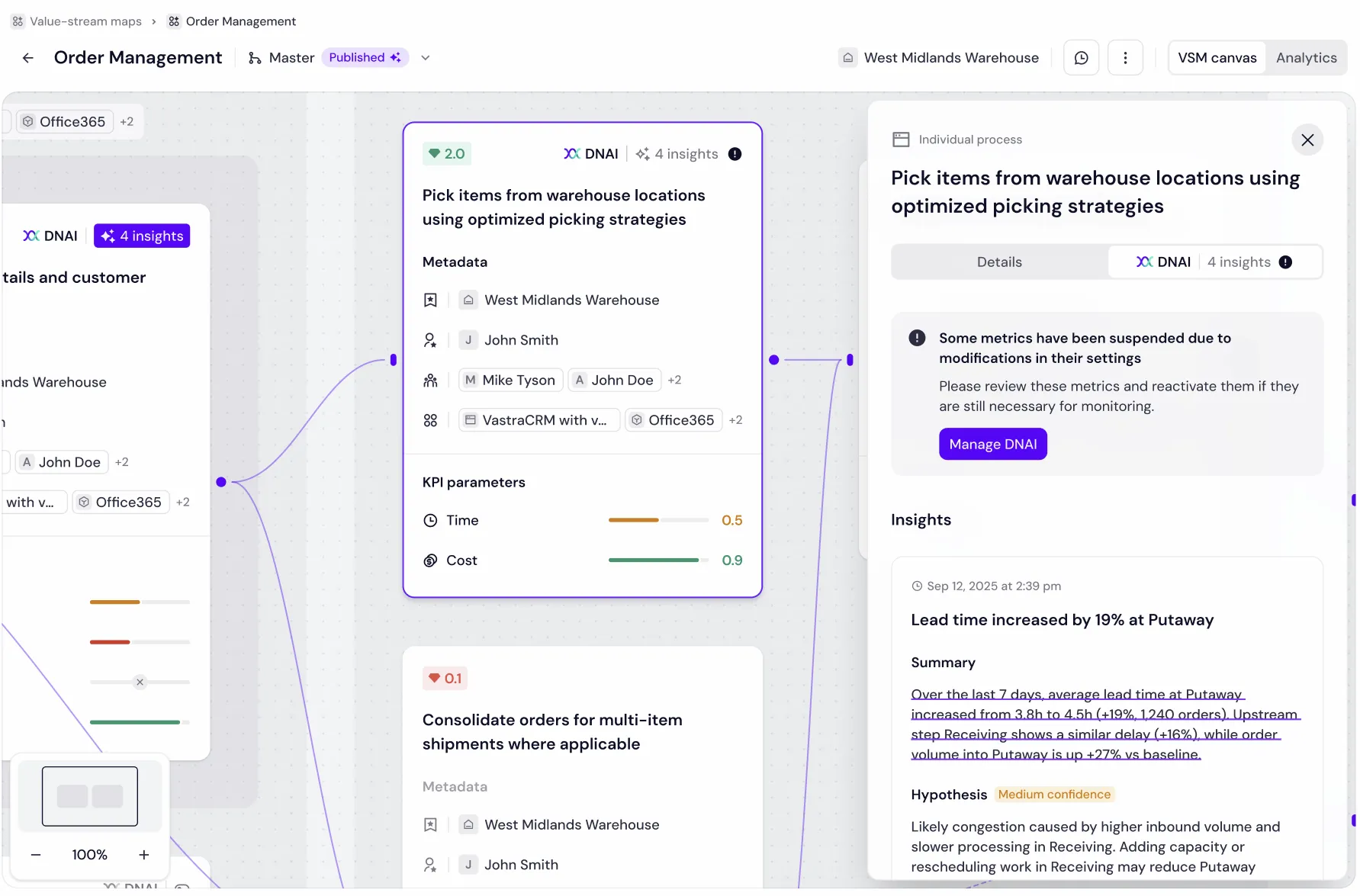
Every step an agent took, with inputs, outputs and cost, visible to your team.

Decor Icon

Evaluation in CI

Regression tests on every prompt, model or tool change, so quality does not drift.

Decor Icon

Model choice by evidence

Hosted or open-weight models chosen on your data, not on leaderboards.

Decor Icon
Decor Icon

Cost control

Caching, routing and smaller models where they hold quality, measured per task.
Decor Icon

Have an agent in a demo that needs to go live?

Decor Icon

Read how a team of four put an agent system into production in 6–8 weeks.

Decor Icon
How we engage

Start small, with a fixed scope

2 weeks · fixed fee

AI Production Readiness Review

Know what to build before you fund it. An evaluation baseline on your data, a target architecture, a run-cost model and a go/no-go plan.

6–9 weeks · team of 4

Pilot-to-Production Sprint

One workflow, live in production. Built or rebuilt, connected to your tools, with human approvals where the stakes are high and monitoring against the baseline.

Monthly · from 3 months

Forward-deployed AI engineers

Senior AI and data engineers who join your team, work in your tools and ship on your roadmap.

Part-time · monthly

Fractional AI CTO

Senior leadership for your AI roadmap: model and vendor choices, team design, architecture reviews and board reporting.

What clients say

Decor Icon

Top Ruby On Rails Developer

Certificate Pic
Decor Icon

Global

Certificate Pic
Decor Icon

Champion

Certificate Pic
Decor Icon

Top user experience company

Certificate Pic
Decor Icon

Top BI & Big Data company

Certificate Pic
Decor Icon

Top Software developers

Certificate Pic
Decor Icon

Teams that kept working with us

From my experience, it is hard to find a team who have both excellent technical and commercial skills. Busy Rebel has never let us down, so we continue to work with them. The most important criteria we have as a team is creating & maintaining high standards; Busy Rebel has this in spades.

Cormac Horan
Product & Strategy Director, Co-Founder at BillWinner

I've had the pleasure of working with a few software houses in the past, but none of them compares to the team at Busy Rebel. Their sense of mission and purpose is unparalleled, and their in-house skills are excellent. I always know that I can rely on them to get the job done, and done well, even if we are working remotely.

Fiachra Ó Comhraí
Former VP at Salesforce Inc., CEO at RenewalDiary

Busy Rebel provides backend and data engineers to scale the world's #1 student engagement CRM's internal team. The team builds new features and modules, builds data integration pipelines, and maintains the existing product. Extremely happy with the outcome.

Petar Djordjevic
CTO, at Element451

We've been partnering with Busy Rebel for almost 5 years now, and it is an exceptional software development partner. The responsiveness, solid experience, and good communication are impressive. Brilliant!

Torben Berner
Board Member at Destination Sjælland

Thanks to the contributions of Busy Rebel, our organization as a massive worldwide distributor has passed all phases of digital transformation, gained a competitive advantage, and somewhere has revolutionized our industry. Busy Rebel is extremely productive digital partner, and internal stakeholders are particularly impressed with the vendor's dedication to success and attention to detail.

Sascha Rosinger
CEO at Machinex Inc.

Tell us what you’re trying to ship

An engineer replies within one business day. We never share your details.

Agentic AI development: FAQ

Answers before you book

What is agentic AI?

Agentic AI describes systems that plan and carry out multi-step tasks toward a goal, using tools and data, instead of answering a single prompt. In a business that means agents that read, decide and act inside your existing systems, with people approving the steps that matter.

How long does it take to build an AI agent?

Our recent agent projects reached production in 6–9 weeks with a team of four. The first two weeks set the evaluation baseline; the rest is the production build, integrations and rollout.

How do you stop agents from making mistakes?

We limit what each agent can access, add approval points for risky actions, trace every step, and test every change against an evaluation set built from your real cases.

Which models do you use?

Whichever performs best on your evaluation set at an acceptable cost: hosted models from the major labs or open-weight models you run yourself. We often pair a large model for planning with smaller ones for routine steps.

When does a knowledge graph beat vector search for RAG?

When a question needs several hops across entities (which accounts on a given contract raised a given issue), or a view of a whole corpus rather than a few passages. On corpus-wide questions, Microsoft Research reported more comprehensive answers from graph-based retrieval than from vector RAG (Edge et al., 2024). For direct lookups, hybrid vector and keyword search is cheaper and usually as accurate. We decide on your evaluation set, comparing accuracy and cost per query. Our AI knowledge graph shows how these methods connect.

Who owns the system after launch?

You do. Code, prompts, evaluation sets and documentation are yours, and we hand over runbooks so your team can operate and change it.